
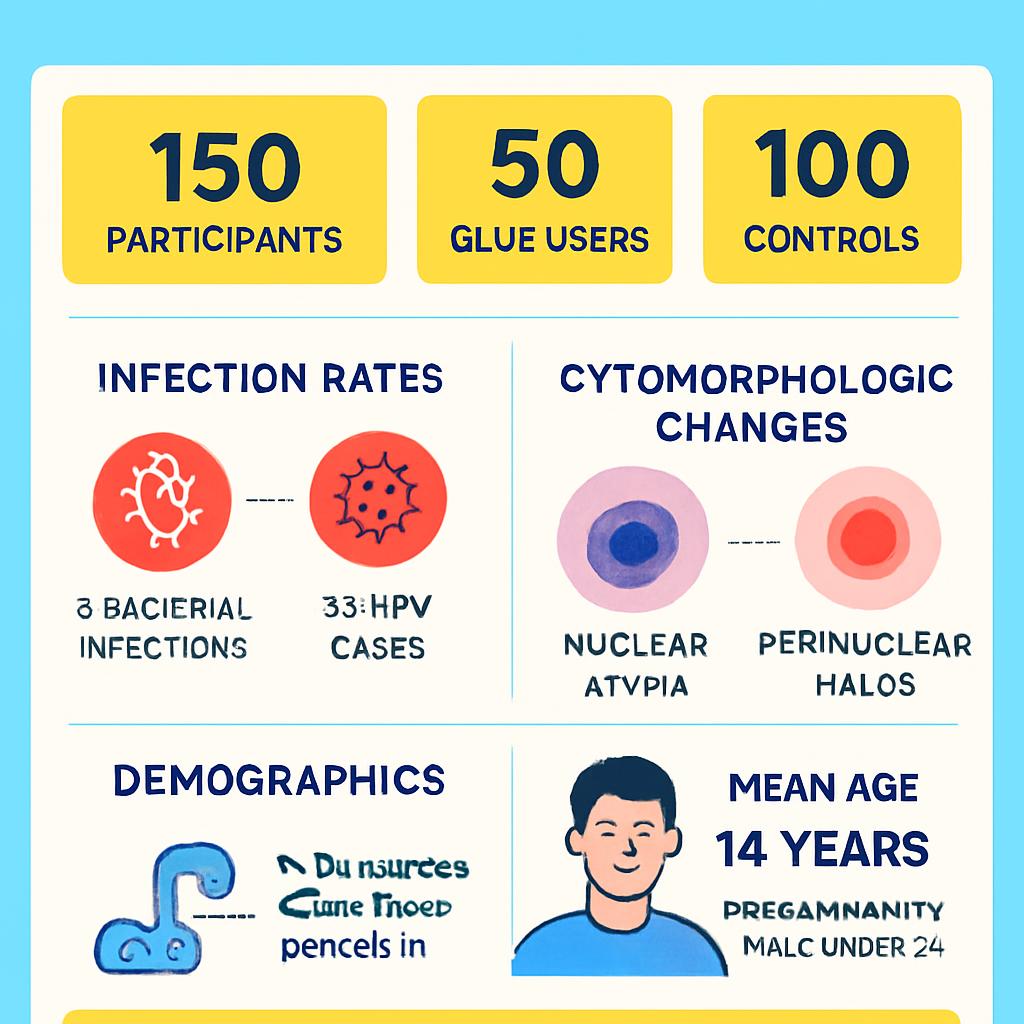


Features of Buccal Mucosa among Glue Abusers in Shendi town, Sudan
- Department of Histopathology and Cytology, Faculty of Medical Laboratory Sciences, Shendi University, Sudan
- Department of Microbiology, Faculty of Medical Laboratory Sciences, Shendi University, Sudan
- Department of Microbiology, Faculty of Medical Laboratory Sciences, Omdurman Islamic University, Sudan
- Ahfad University for Women, Sudan
Abstract
Background: According to social organizations, glue inhalation has become increasingly prevalent among street-involved youth. This study aimed to evaluate the cytomorphological effects of glue inhalation on buccal mucosal cells.
Methods: A cross-sectional study was conducted in 150 individuals aged < 25 years; 50 habitual glue users served as the case group. Fifty age- and sex-matched peers with no history of inhalant use comprised Control 1, whereas 50 apparently healthy subjects with neither inhalant nor tobacco exposure formed Control 2. Exfoliated buccal samples were obtained, Papanicolaou-stained, and evaluated microscopically for cytomorphological alterations.
Results: Among glue users, bacterial infection was detected in 8/50 participants and human papillomavirus infection in 32/50. Perinuclear halo formation was present in 43/50 cases. Nuclear atypia, inflammation, and infection differed significantly between groups (each p < 0.001), whereas the prevalence of perinuclear halos did not (p = 0.71). Nuclear atypia correlated positively with both duration of inhalant use (p < 0.001) and quantity inhaled (p = 0.001).
Conclusions: Chronic glue inhalation is therefore associated with significant cytomorphological changes in buccal epithelial cells, including nuclear atypia, perinuclear halos, inflammation, and bacterial as well as viral infection.
Introduction
Glue is widely produced and used daily by many manufacturers; however, its considerable potential for severe addiction has raised serious public-health concerns. Glue contains a mixture of toxic chemicals classified as volatile organic solvents, rendering it highly effective as an adhesive. When inhaled intentionally, these solvents function as drugs of abuse. The acute effects resemble those of other psychoactive substances, producing euphoria, transient alertness, and increased psychomotor activity. Because these effects are brief, users rapidly develop a compelling urge to re-inhale the substance 1,2,3.
Methods
This was a descriptive cross-sectional study; the study was conducted in Shendi, Sudan. Samples were collected from the buccal mucosa. The study was performed from March 2022 to March 2023. Participants were males aged < 25 years residing in Shendi; individuals ≥ 25 years were excluded. One hundred and fifty buccal samples were obtained; prior to collection, each participant rinsed his mouth with water to minimize contamination. The buccal mucosa was then scraped using a disposable wooden spatula, and the scraped material was smeared directly onto a frosted-end, labeled microscopic glass slide. Each smeared slide was immediately fixed in 95 % ethanol for at least 15 minutes. After fixation, the slide was stained using the Papanicolaou staining method. The smears were then screened under a light microscope by the researchers and confirmed by experienced cytologists independently.
Quality controls
Sterile, disposable toothpaste was used to collect the samples; buccal samples were smeared directly onto slides to avoid air-drying artifacts. The smears were immediately fixed in 95 % ethanol to achieve rapid chromatin fixation. All staining solutions were filtered before use, and all dishes and Coplin jars were washed both before and after use. The quality of the staining solutions was checked prior to use. During processing, all dishes and Coplin jars were tightly closed with screw-top covers to prevent evaporation and contamination. Contamination was also avoided during mounting and coverslipping.
Data analysis and presentation
Data was computed and analyzed by using Statistical Package for Social Sciences (SPSS) software program; version (21.0).
Ethical approval and consent to participate
Ethical approval was obtained from Shendi University Ethical Research Committee in accordance with the Declaration of Helsinki Principles, and the agreement was taken from hospital administrations before sample and data collection. The patient’s information was highly secured and not used for other purposes than scientific inquiry.
Ethical clearance code number: SH-RES/03-022-04
Date: 13/2/2022
Results
The frequency of the study participants
| Participant | Number |
|---|---|
| Cases | 50 |
| Controls 1 | 50 |
| Controls 2 | 50 |
| Total | 150 |
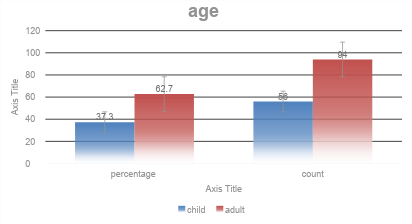
Shows age frequency among study group.
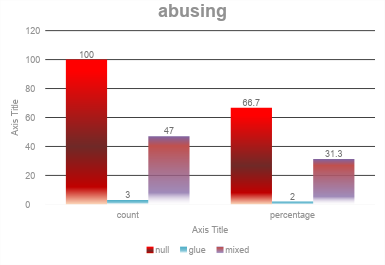
Demonstrates abusing frequency.
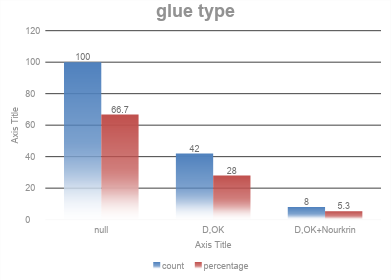
Illustrates glue types used by participants.
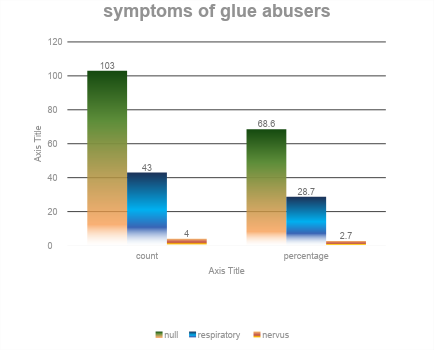
Indicates clinical symptoms of glue abusing.
The frequency of the nuclear atypia among study populations.
| Participant | Nuclear atypia | Total | P value | |
|---|---|---|---|---|
| Present | absent | |||
| Cases | 50 | 0 | 50 | 0.000 |
| Controls 1 | 40 | 10 | 50 | |
| Controls 2 | 31 | 19 | 50 | |
| Total | `121 | 29 | 150 | |
The frequency of the inflammation among study populations.
| Participant | Inflammation | Total | P value | ||
|---|---|---|---|---|---|
| Acute | Chronic | absent | |||
| Cases | 0 | 41 | 9 | 50 | 0.000 |
| Controls 1 | 1 | 10 | 39 | 50 | |
| Controls 2 | 3 | 1 | 46 | 50 | |
| Total | 4 | 52 | 94 | 150 | |
The frequency of the infections among study populations.
| Participant | Infections | Total | P value | ||
|---|---|---|---|---|---|
| Bacteria | HPV | absent | |||
| Cases | 8 | 32 | 10 | 50 | 0.000 |
| Controls 1 | 0 | 9 | 41 | 50 | |
| Controls 2 | 1 | 6 | 43 | 50 | |
| Total | 9 | 47 | 94 | 150 | |
The frequency of the perinuclear hallo among study populations.
| Participant | Perinuclear hallo | P value | ||
|---|---|---|---|---|
| Present | absent | Total | ||
| Cases | 43 | 7 | 50 | 0.71 |
| Controls 1 | 42 | 8 | 50 | |
| Controls 2 | 41 | 9 | 50 | |
| Total | 126 | 24 | 150 | |
The relationship between duration of abusing glue and nuclear atypia.
| Nuclear atypia | Addiction duration/year | Total | ||
|---|---|---|---|---|
| Less than 5 | 6-10 | 11-15 | ||
| Absent | 0 | 0 | 0 | 0 |
| Present | 38 | 10 | 2 | 50 |
| Total | 38 | 10 | 2 | 50 |
The relationship between the dose of glue and nuclear atypia.
| Nuclear atypia | Addiction doses/day | Total | |||
|---|---|---|---|---|---|
| Less than 5 | 5-10 | 11-15 | 16-20 | ||
| Absent | 0 | 0 | 0 | 0 | 0 |
| Present | 4 | 26 | 10 | 10 | 50 |
| Total | 4 | 26 | 10 | 10 | 50 |
Discussion
This cross-sectional study was conducted between March 2022 and March 2023 in Shendi Town, Sudan, to assess the effect of glue sniffing on buccal mucosal cells. A total of 150 participants were enrolled; 50 were glue abusers, 50 served as Control 1 (matched for demographic parameters but without glue abuse), and 50 constituted Control 2 (apparently healthy individuals with no history of tobacco use) (Table 1).
Regarding age distribution, 94 participants were young adults (62.7%), whereas 56 were children (37.3%) (Figure 4.1). In the United States, nearly 20 % of adolescents have experimented with inhalants at least once by eighth grade, and the mean age of first-time inhalant abuse is 13 years. The mean age among glue abusers in this study was 14 years, which may be attributed to pubertal hormonal changes; this result is consistent with previous studies 4,5. With respect to the pattern of substance misuse, 3 participants abused glue alone (2 %), whereas 47 reported mixed use of glue, tobacco, and cigarettes (31.3 %).
With respect to the brands of glue used, 42 participants concurrently abused two products (D and OK), representing 28%, whereas 8 participants abused three products (D, OK, and Nokrin), accounting for 5.3% (Figure 3). To our knowledge, no published studies have examined the association between specific commercial glue brands and cytological alterations of the buccal mucosa in inhalant abusers. Concerning clinical manifestations, 43 participants reported respiratory symptoms (86%), 4 reported neurological symptoms (8%), and 3 were asymptomatic (6%) (Figure 4) 6. Assessment of nuclear atypia demonstrated a significant difference between the test and control groups (Table 2) 7,8. Similarly, inflammation differed significantly between groups (Table 3) 7,8. Finally, a significant difference in infection rates was observed (Table 4); cytology revealed bacterial colonization with polymorphonuclear leukocytes and evidence of human papillomavirus infection characterized by koilocytosis—intermediate-sized cells exhibiting nuclear enlargement, irregular nuclear contours, hyperchromasia, mild chromatin coarseness, and perinuclear cytoplasmic vacuolization (koilocytes) 8.
With respect to the perinuclear halo, no significant difference was detected between the test and control groups (Table 5) 9. Analysis of the relationship between the duration of glue abuse and nuclear atypia revealed a significant association (Table 6); nevertheless, no published studies have addressed the impact of prolonged glue exposure on buccal-mucosal cytology. A similarly significant association was found between glue dose and nuclear atypia (Table 7), yet the literature contains no reports describing a dose-response relationship in buccal mucosa among glue abusers. Future investigations should include larger, geographically diverse cohorts to strengthen and generalise these results.
Future studies should incorporate comprehensive data on the global prevalence of glue sniffing and its public-health burden, and should present their findings in tables or figures rather than narrative text alone, thereby improving data visualization. In addition, the inclusion of confidence intervals or other measures of variability would strengthen the interpretation of the results.
Further investigations should also elucidate the potential pathophysiological mechanisms underlying the observed effects, discuss the implications for public-health interventions, and formulate evidence-based recommendations for future research. A more exhaustive review of the existing literature and a transparent discussion of the study’s limitations are warranted.
The present study is constrained by a small sample size; moreover, all specimens were obtained exclusively from Shendi Town, Sudan, limiting the external validity of the findings and precluding extrapolation to the broader population of street children who inhale glue. Sampling additional cities and regions would facilitate a more comprehensive assessment of the effects of glue inhalation on buccal mucosal cells. Finally, the manuscript provides insufficient detail regarding participant selection and exclusion criteria.
Conclusion
Glue inhalation was associated with significant morphological alterations in buccal mucosal cells, including nuclear atypia and perinuclear halos; additionally, inflammatory changes and bacterial as well as viral infections were also observed among glue abusers. These findings are important because they address substance abuse among street children and provide clear recommendations for healthcare professionals and policymakers. Overall, the manuscript offers valuable insights into the effects of glue sniffing on buccal mucosal cells among street children in Shendi, Sudan.
Abbreviations
HPV: Human Papillomavirus, SPSS: Statistical Package for the Social Sciences
Consent for publication
Not applicable.
Availability of data and materials
The data sets used and/or analyzed during the current study are available from the corresponding author on reasonable request.
Competing interests
Authors declare that they have no competing interests.
Funding
Not applicable.
Authors’ contributions
MAE and ASE and AAI conceived the design and carried out the experiments. AAAA and IBYE obtained, analyzed and interpreted the data. AAMM and MBMB wrote and revised the manuscript. BMTG and AAI provides financial support for all experiments. All authors have critically reviewed and approved the final draft and are responsible for the content and similarity index of the manuscript.
Acknowledgement
First of all, we thank the Almighty Allah who helped us to complete this study. We would like to express endless thanks to staff of Histopathology and Cytology Department-Shendi University, for their great efforts and guidance. We would like also to thank the whole staff of the Faculty of Medical Laboratory science in Shendi University.